78. Pancreatic endocrine tumours
High yield
Neuroendocrine tumours of the islets; insulinoma and gastrinoma lead the functioning types; most are non-functioning and resected.
Exam Prep · State examSurgery · HPBSurgery · Surgical oncology
1. Definition
- Pancreatic neuroendocrine tumours (PNETs, pNENs) → tumours from the endocrine (islet) cells of the pancreas
- Functioning → release a hormone and cause a clinical syndrome (insulinoma, gastrinoma, glucagonoma, VIPoma, somatostatinoma)
- Non-functioning → no hormone syndrome (may release chromogranin A or pancreatic polypeptide)
- Neuroendocrine carcinoma (NEC) → poorly differentiated, high-grade, aggressive
2. Epidemiology
- About 1–2% of pancreatic tumours; incidence rising (about 1 per 100,000 a year), mainly from incidental small tumours on imaging
- Non-functioning → 60–90%; most common type today
- Insulinoma → most common functioning PNET (1–4 per million a year); women slightly more; age 40–60
- Gastrinoma → second most common functioning; in the pancreas or duodenum (duodenum in up to 60–70%)
- Glucagonoma, VIPoma, somatostatinoma → rare
- 5–15% hereditary → MEN1, von Hippel-Lindau (VHL), neurofibromatosis type 1, tuberous sclerosis
- Better prognosis than adenocarcinoma → 5-year survival about 50–60% across all stages; over 90% for small localised tumours
3. Aetiology and risk factors
- Most sporadic
- Genetic syndromes:
- MEN1 (menin gene, chromosome 11) → "3 Ps": parathyroid (hyperparathyroidism, 90%), pancreas (PNETs: non-functioning, gastrinoma, insulinoma), pituitary (prolactinoma)
- VHL → non-functioning PNETs, serous cystadenomas, phaeochromocytoma, renal cell carcinoma, haemangioblastomas
- NF1 → duodenal somatostatinoma
- Tuberous sclerosis
- Somatic mutations → MEN1, DAXX/ATRX, mTOR pathway genes
- Weak links → family history of cancer, smoking, diabetes
4. Pathogenesis
- From islet or ductal stem cells with neuroendocrine features
- Insulinoma → insulin release not controlled by glucose → fasting hypoglycaemia; over 90% benign, small (under 2 cm), single, spread evenly through the gland
- Gastrinoma → gastrin excess → acid hypersecretion → Zollinger-Ellison syndrome (multiple, severe, atypical ulcers; diarrhoea from acid inactivating lipase); 60–90% malignant; most in the gastrinoma triangle
- Glucagonoma → glucagon → catabolism, diabetes, necrolytic migratory erythema; mostly malignant, body and tail
- VIPoma (Verner-Morrison) → vasoactive intestinal peptide → watery diarrhoea, hypokalaemia, achlorhydria (WDHA); mostly malignant
- Somatostatinoma → inhibits many hormones → diabetes, gallstones, steatorrhoea
- Non-functioning → found late (larger), mass effect, liver metastases
- Spread → lymph nodes, liver (most common), bone
- Malignancy → defined by spread or invasion, not cell appearance; risk rises with size (over 2 cm), grade and Ki-67
5. Classification
WHO 2019 grade (well-differentiated NETs)
- G1 → Ki-67 under 3%, mitoses under 2 per 2 mm²
- G2 → Ki-67 3–20%, mitoses 2–20
- G3 → Ki-67 over 20%, well differentiated
- NEC → poorly differentiated, Ki-67 over 20% (small cell or large cell)
- MiNEN → mixed neuroendocrine and non-neuroendocrine
Gastrinoma triangle (Passaro)
- Junction of the cystic and common bile ducts (above)
- Junction of the second and third parts of the duodenum (below)
- Junction of the neck and body of the pancreas (medial)
- Contains about 80–90% of gastrinomas
Functioning tumours
- Insulinoma → insulin
- Gastrinoma → gastrin
- Glucagonoma → glucagon
- VIPoma → VIP
- Somatostatinoma → somatostatin
- Rare → ACTHoma, PTHrP-oma, serotonin-producing
6. Clinical picture
Symptoms
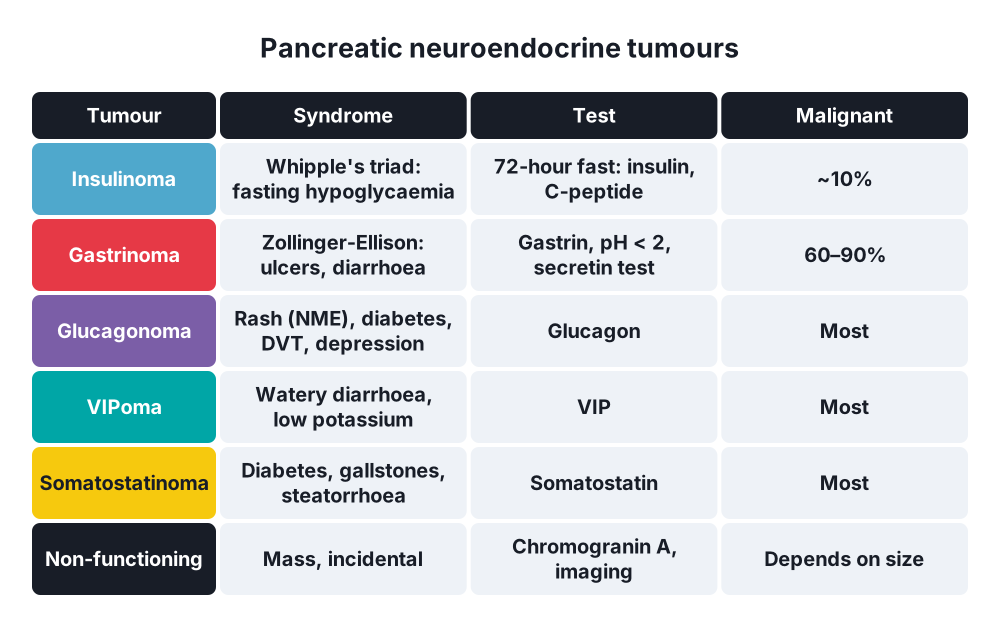
- Insulinoma → Whipple's triad:
- Symptoms of hypoglycaemia on fasting or exercise
- Low blood glucose at the time (under 2.2–3.0 mmol/L)
- Relief with glucose
- Neuroglycopenic → confusion, odd behaviour, visual disturbance, seizures, coma (often misdiagnosed as epilepsy or psychiatric illness)
- Adrenergic → sweating, tremor, palpitations, hunger
- Weight gain (eating to prevent attacks)
- Gastrinoma (Zollinger-Ellison):
- Recurrent, refractory peptic ulcers, often multiple, in unusual sites (jejunum, distal duodenum), recurrence after surgery
- Diarrhoea (secretory, improves with PPI), steatorrhoea
- Reflux oesophagitis, complications (bleeding, perforation)
- Glucagonoma → necrolytic migratory erythema (red, blistering, crusting rash in the groin, buttocks, face), diabetes, weight loss, DVT, glossitis, depression ("4 Ds": dermatitis, diabetes, DVT, depression)
- VIPoma → profuse watery diarrhoea (over 3 L a day, "pancreatic cholera"), hypokalaemia, dehydration, flushing
- Somatostatinoma → diabetes, gallstones, steatorrhoea, weight loss
- Non-functioning → incidental; epigastric pain, weight loss, jaundice, mass, liver metastases
Signs
- Often none
- Rash (glucagonoma), dehydration (VIPoma)
- Jaundice, mass, hepatomegaly (advanced)
- MEN1 → signs of hyperparathyroidism (kidney stones, bone pain), pituitary tumour
7. Diagnosis
Biochemistry
- Insulinoma:
- Supervised 72-hour fast → gold standard: glucose under 3.0 mmol/L (55 mg/dL) with inappropriately high insulin (≥ 3 µU/mL), C-peptide (≥ 0.6 ng/mL) and proinsulin; low beta-hydroxybutyrate
- Sulfonylurea screen negative (excludes factitious hypoglycaemia)
- Factitious insulin injection → high insulin, low C-peptide
- Gastrinoma:
- Fasting serum gastrin → over 10 times normal (over 1,000 pg/mL) with gastric pH under 2 is diagnostic
- Stop PPIs before testing if safe (PPIs raise gastrin)
- Secretin stimulation test → paradoxical rise in gastrin over 120 pg/mL
- Basal acid output
- Glucagonoma → plasma glucagon over 500 pg/mL
- VIPoma → plasma VIP; low potassium
- Somatostatinoma → plasma somatostatin
- Chromogranin A → general tumour marker (false high with PPIs, renal failure)
- MEN1 screening → calcium, PTH, prolactin; genetic testing in young patients, multiple tumours, or gastrinoma
Localisation
- Multiphase CT → hypervascular, arterial enhancing lesion; liver metastases
- MRI (diffusion) → small tumours, liver metastases
- EUS → most sensitive for small pancreatic tumours (over 90%); FNA for grade (Ki-67); tattoo for surgery
- Gallium-68 DOTATATE PET-CT (somatostatin receptor imaging) → most sensitive for well-differentiated NETs and metastases; selects patients for PRRT
- Insulinomas often have few somatostatin receptors → GLP-1 receptor imaging (exendin PET)
- FDG PET → high-grade tumours
- Selective arterial calcium stimulation test with hepatic venous sampling → occult insulinoma
- Intraoperative ultrasound and palpation → finds most remaining tumours; duodenotomy finds small duodenal gastrinomas
8. Differential diagnosis
- Hypoglycaemia → factitious (insulin, sulfonylureas), adrenal insufficiency, liver failure, alcohol, non-islet cell tumour hypoglycaemia (IGF-2), nesidioblastosis (after gastric bypass), dumping
- Raised gastrin → PPI use (most common), atrophic gastritis, pernicious anaemia, renal failure, H. pylori, gastric outlet obstruction, retained antrum
- Diarrhoea → carcinoid syndrome, laxative abuse, inflammatory bowel disease, medullary thyroid cancer
- Pancreatic mass → ductal adenocarcinoma (hypovascular), solid pseudopapillary neoplasm, metastases (renal cell carcinoma, also hypervascular), accessory spleen
9. Treatment
Conservative
- Symptom control first:
- Insulinoma → frequent small meals, diazoxide (inhibits insulin release), somatostatin analogues (care: may worsen hypoglycaemia), glucose infusion
- Gastrinoma → high-dose PPI (e.g. omeprazole 60–120 mg daily); controls acid in almost all
- VIPoma → IV fluids and potassium, octreotide
- Glucagonoma → octreotide, amino acid infusions, zinc, anticoagulation
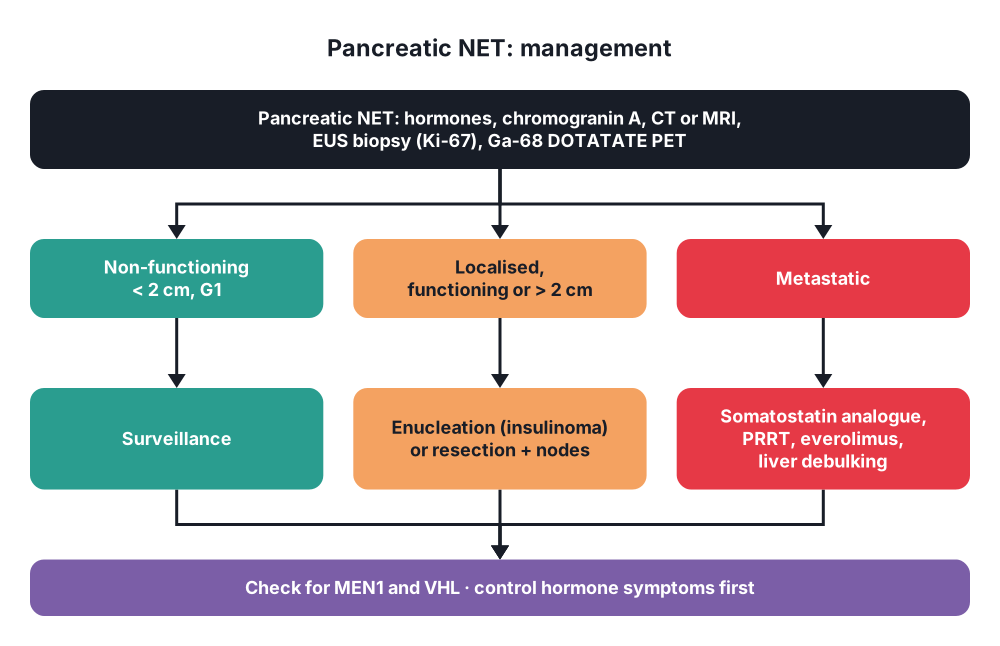
- Small non-functioning tumours under 2 cm, G1, asymptomatic → surveillance (MRI or EUS every 6–12 months) is safe, especially in MEN1 and older patients
- Advanced or metastatic well-differentiated disease:
- Somatostatin analogues (octreotide, lanreotide) → control symptoms and slow growth (CLARINET)
- Peptide receptor radionuclide therapy (PRRT) → lutetium-177 DOTATATE for somatostatin receptor-positive tumours
- Everolimus (mTOR inhibitor), sunitinib (tyrosine kinase inhibitor)
- Chemotherapy → capecitabine with temozolomide (CAPTEM), streptozocin with 5-FU
- Liver metastases → TACE, TARE, ablation
- NEC → platinum-etoposide chemotherapy (like small cell lung cancer); surgery rarely
Surgical
- Resection is the only cure for localised disease
- Insulinoma:
- Enucleation → small, benign, away from the main duct (over 2–3 mm from it); laparoscopic preferred
- Distal pancreatectomy (spleen-preserving) → body or tail, near the duct
- Whipple → rarely (deep head tumours)
- Cure rate over 90%
- Gastrinoma:
- Sporadic → exploration with duodenotomy (finds duodenal tumours), intraoperative ultrasound, enucleation or resection with lymphadenectomy (nodes involved often)
- MEN1 gastrinoma → multiple, small, usually duodenal; surgery debated; resect if over 2 cm; parathyroidectomy first (lowers gastrin and acid)
- Total gastrectomy → historical (before PPIs)
- Non-functioning tumours over 2 cm (or growing, G2, symptoms) → formal resection with lymphadenectomy (Whipple or distal pancreatectomy); parenchyma-sparing resections for small low-grade tumours
- Glucagonoma, VIPoma, somatostatinoma → resection with nodes (most are malignant); debulking for symptoms
- Liver metastases → resection or debulking (if over 70–90% can be removed) improves symptoms and survival; liver transplantation in very selected patients
- Cholecystectomy during surgery if long-term somatostatin analogues are planned (gallstones)
10. Complications
- Disease → hypoglycaemic brain injury, ulcer complications (bleeding, perforation, stricture), dehydration and renal failure (VIPoma), VTE (glucagonoma), liver metastases, carcinoid crisis (rare)
- Enucleation → pancreatic fistula (higher than with formal resection, up to 30–40%)
- Resection → fistula, delayed gastric emptying, diabetes, exocrine insufficiency
- PPIs → B12 deficiency, fractures, C. difficile infection
- Somatostatin analogues → gallstones, steatorrhoea, hyperglycaemia
- PRRT → bone marrow suppression, renal toxicity
Show as a list
Pancreatic NETs
- Types
- Non-functioning: most
- Insulinoma: commonest functioning
- Gastrinoma
- Glucagonoma
- VIPoma
- Somatostatinoma
- Genetics
- MEN1: 3 Ps
- VHL
- Grade
- Ki-67: G1 < 3, G2 3-20, G3 > 20
- NEC
- Insulinoma
- Whipple's triad
- 72-hour fast
- C-peptide
- Enucleation
- Gastrinoma
- Zollinger-Ellison
- Gastrin, secretin test
- Triangle
- Duodenotomy
- Imaging
- Arterial enhancing
- EUS
- Ga-68 DOTATATE PET
- Treatment
- Resect > 2 cm
- Watch < 2 cm
- Octreotide, lanreotide
- PRRT
- Everolimus