22. Necrosis and gangrene
High yield
Tissue death in a living body; dry gangrene mummifies and demarcates, wet gangrene putrefies and spreads.
Exam Prep · State examSurgery · General surgery
1. Definition
- Necrosis → death of cells or tissues in a living organism
- Gangrene → necrosis of tissue in contact with the external environment, with drying or putrefaction; black colour from iron sulphide (haemoglobin breakdown)
- Sequestrum → piece of dead tissue separated from living tissue (bone)
- Infarct → necrosis of part of an organ from arterial occlusion
2. Aetiology
Ischaemic (circulatory)
- Arterial occlusion → atherosclerosis, embolism, thrombosis
- Arterial injury, ligation
- Arteritis → Buerger's disease
- Vasospasm → Raynaud's, ergotamine
- Diabetic microangiopathy
- Venous gangrene → phlegmasia caerulea dolens
- External compression → tight plaster, tourniquet, strangulated hernia, volvulus, pressure ulcers
Physical
- Mechanical trauma, crush
- Thermal → burns, frostbite
- Electrical injury
- Radiation
Chemical
- Acids → coagulative necrosis
- Alkalis → liquefactive necrosis
- Intra-arterial injection of drugs
Infective
- Clostridia → gas gangrene
- Necrotising fasciitis
- Fournier's gangrene → scrotum, perineum
- Meleney's synergistic gangrene
Neurotrophic
- Peripheral neuropathy (diabetes, leprosy), spinal cord injury → pressure ulcers
3. Pathological characteristics
Types of necrosis
- Coagulative → protein denaturation; heart, kidney, spleen infarcts
- Liquefactive (colliquative) → enzymatic digestion; brain, abscess
- Caseous → tuberculosis
- Fat necrosis → pancreatitis, breast trauma
- Fibrinoid → vessel walls in vasculitis
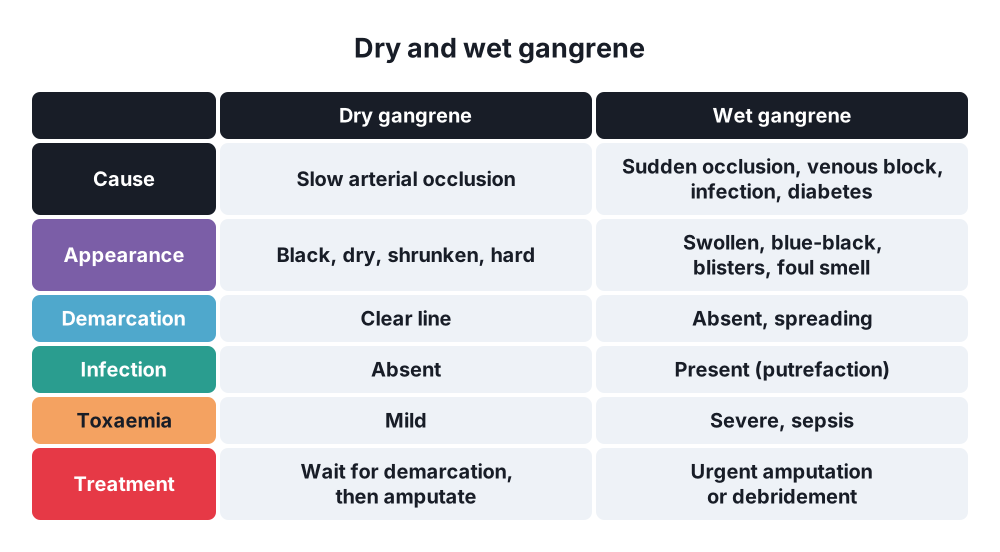
Dry gangrene (mummification)
- Slow arterial occlusion, little fluid in tissue, no infection
- Tissue dries, shrinks, becomes black and hard
- Clear line of demarcation → granulation tissue between living and dead tissue
- Little toxin absorption → mild general symptoms
- Spontaneous separation (auto-amputation)
Wet gangrene
- Sudden arterial occlusion, venous obstruction, oedema, infection
- Putrefactive bacteria → tissue swelling, liquefaction
- No demarcation, rapid spread
- Severe toxin absorption → sepsis, high mortality
- Internal organs → always wet (bowel, appendix, gallbladder)
4. Clinical characteristics
Dry gangrene
- Starts at the toes or fingertips
- Black, dry, wrinkled, cold, insensate tissue
- Line of demarcation → red zone of inflammation between live and dead tissue
- Absent distal pulses
- General condition preserved
Wet gangrene
- Swollen, oedematous, blue-black or greenish skin
- Blisters with dark fluid
- Foul smell, discharge
- Crepitus with gas-forming organisms
- Fever, tachycardia, toxaemia, septic shock
5. Diagnosis
Laboratory
- Leucocytosis, CRP, blood cultures
- Blood glucose, HbA1c
- Renal function, creatine kinase
Imaging
- Duplex ultrasound, CT angiography → level of arterial occlusion
- X-ray → gas, osteomyelitis
- Ankle-brachial pressure index (ABPI)
6. Treatment: principles
General
- Convert wet gangrene to dry → keep dry, open to air, antiseptic dressings
- No elevation of an ischaemic limb
- Antibiotics → wet gangrene, sepsis
- Control diabetes, fluids, analgesia
- Treat the cause → revascularisation (angioplasty, bypass, embolectomy), anticoagulation
- Stop smoking
Local and surgical
- Dry gangrene:
- Wait for demarcation
- Necrectomy or amputation through the line of demarcation
- Revascularisation first if possible → lower amputation level
- Wet gangrene:
- Urgent amputation or radical debridement above the infection
- Guillotine amputation in sepsis, then definitive amputation later
- Amputation levels → toe, ray, transmetatarsal, below-knee, above-knee
- Visceral gangrene → resection of the organ (bowel resection, appendicectomy, cholecystectomy)
7. Complications
- Sepsis, septic shock
- Spread of infection
- Acute kidney injury
- Loss of limb
- Death
Show as a list
Necrosis and gangrene
- Causes
- Ischaemic
- Physical
- Chemical
- Infective
- Neurotrophic
- Necrosis types
- Coagulative
- Liquefactive
- Caseous
- Fat
- Dry gangrene
- Mummification
- Demarcation
- Mild toxaemia
- Wet gangrene
- Putrefaction
- No demarcation
- Sepsis
- Treatment
- Revascularisation
- Necrectomy
- Amputation