21. Anaerobic gas infection
High yield
Clostridial myonecrosis in devitalised muscle; toxins cause gas, oedema, necrosis and shock; radical debridement and penicillin.
Exam Prep · State examSurgery · General surgerySurgery · Emergency and trauma
1. Definition
- Anaerobic gas infection (gas gangrene, clostridial myonecrosis) → rapidly spreading infection of muscle by toxin-producing clostridia, with gas formation, oedema, necrosis and severe toxaemia
- Non-clostridial anaerobic infection → mixed anaerobes with aerobes (Bacteroides, Peptostreptococcus); synergistic gangrene, necrotising fasciitis
2. Aetiology
- Clostridium perfringens (welchii) → 80–90% of cases
- C. novyi (oedematiens), C. septicum, C. histolyticum
- Gram-positive, spore-forming, obligate anaerobic rods
- Spores → soil, dust, human and animal intestine
- C. septicum → spontaneous (non-traumatic) gas gangrene in colorectal cancer and neutropenia
3. Conditions for development
- Devitalised muscle, low oxygen tension
- Deep, contaminated wounds → war wounds, gunshot, crush injuries, open fractures
- Soil, clothing, foreign bodies in the wound
- Ischaemia → arterial injury, tight plaster, tourniquet
- Delayed or incomplete primary surgical treatment
- Surgery on bowel, biliary tract, amputation for ischaemia
- Diabetes, peripheral arterial disease, intramuscular injections (adrenaline)
- Septic abortion
- Incubation period → 6 h to 3 days (usually < 24 h)
4. Pathogenesis: tissue processes
Toxins
- Alpha toxin (lecithinase, phospholipase C) → destroys cell membranes, haemolysis, myonecrosis, cardiac depression
- Theta toxin → endothelial damage, leucocyte destruction
- Collagenase, hyaluronidase → spread along tissue planes
Microscopic changes
- Muscle fibre necrosis with few neutrophils (toxins destroy leucocytes)
- Gas bubbles between fibres
- Large Gram-positive rods without spores in tissue
- Thrombosis of small vessels
Macroscopic changes
- Muscle → pale, then brick-red, then grey-green or black, does not contract or bleed when cut
- Gas and oedema → raise compartment pressure → further ischaemia (vicious circle)
- Spread along muscle groups, faster along the length of the limb
- Sweetish, mousy foul smell
5. Classification
By clinical form
- Emphysematous (classical) → gas predominates
- Oedematous (toxic) → oedema predominates, little gas; C. novyi
- Mixed
- Putrefactive → tissue liquefaction, foul smell
- Phlegmonous → with pus; mixed flora
By depth
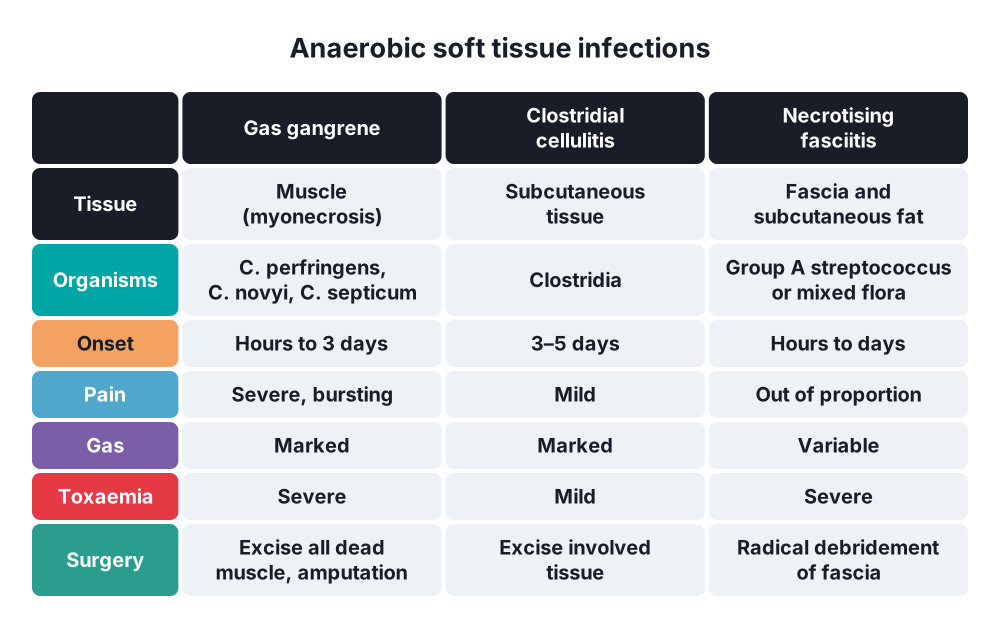
- Epifascial → clostridial cellulitis (anaerobic cellulitis); muscle spared, better prognosis
- Subfascial → myonecrosis, most dangerous
By spread
- Localised
- Spreading
- Fulminant
6. Clinical picture
Local manifestations
- Sudden severe bursting pain in the wound, out of proportion to signs
- Tense, swollen limb; tight dressing, bandage cutting into the skin (thread sign)
- Skin → pale and shiny, then bronze, then dark with haemorrhagic blisters
- Crepitus on palpation; tympanic note on percussion
- Scanty thin brown, foul-smelling discharge (dishwater fluid)
- Muscle bulging out of the wound, dull, not bleeding
- Shaving sign → crackling under a razor
Systemic manifestations
- Tachycardia out of proportion to fever → early sign
- Low-grade fever, then hypothermia in shock
- Apathy or euphoria, anxiety, then confusion
- Pallor, jaundice (haemolysis)
- Hypotension, oliguria → septic shock
- Multi-organ failure
7. Diagnosis
Laboratory
- Gram stain of exudate → large Gram-positive rods, few leucocytes
- Anaerobic culture
- Anaemia (haemolysis), leucocytosis
- Raised creatine kinase, myoglobinuria
- Metabolic acidosis, lactate
Imaging
- X-ray → gas in muscle (feathery pattern)
- CT → gas and fluid along tissue planes
- Surgical exploration → definitive diagnosis
8. Differential diagnosis
- Necrotising fasciitis → fascia and fat; muscle spared
- Clostridial cellulitis
- Gas from wound air or hydrogen peroxide (no toxaemia)
- Erysipelas, phlegmon
- Deep vein thrombosis
9. Treatment
Surgical
- Emergency radical debridement → excision of all dead muscle until it bleeds and contracts
- Wide longitudinal incisions (lampas incisions) through skin and fascia
- Fasciotomy → release compartment pressure
- Wounds left open; irrigation with hydrogen peroxide, oxidising agents
- Repeat inspection and debridement every 12–24 h (second look)
- Amputation → whole limb involved, extensive myonecrosis, fulminant course
- Guillotine (open) amputation through healthy tissue, no sutures
Antibiotics
- Benzylpenicillin high dose intravenously + clindamycin (stops toxin synthesis)
- Add metronidazole or broad-spectrum cover for mixed infection
Supportive
- Intensive care → fluids, blood transfusion, vasopressors
- Correct acidosis, renal support
- Hyperbaric oxygen → adjunct after surgery where available; never delays surgery
- Polyvalent anti-gangrenous serum → historical, little evidence
- Tetanus prophylaxis
Prevention
- Early, complete primary surgical treatment of contaminated wounds
- Leave war and contaminated wounds open
- Prophylactic penicillin in high-risk wounds and amputations for ischaemia
- Isolate patients; sterilise instruments by autoclaving (spores)
10. Complications
- Septic shock, multi-organ failure
- Acute kidney injury, haemolysis
- Loss of limb
- Mortality → 20–30% with treatment, almost 100% without
Show as a list
Gas gangrene
- Organisms
- C. perfringens
- C. novyi
- C. septicum
- Conditions
- Dead muscle
- Deep contaminated wound
- Ischaemia
- Toxins
- Alpha toxin
- Collagenase
- Signs
- Bursting pain
- Crepitus
- Tachycardia
- Bronze skin
- Treatment
- Radical debridement
- Amputation
- Penicillin, clindamycin
- Hyperbaric oxygen